
Xiwangmu: Queen Mother of the West - Celestial Matriarch & Keeper of Yin
Apr 14, 2026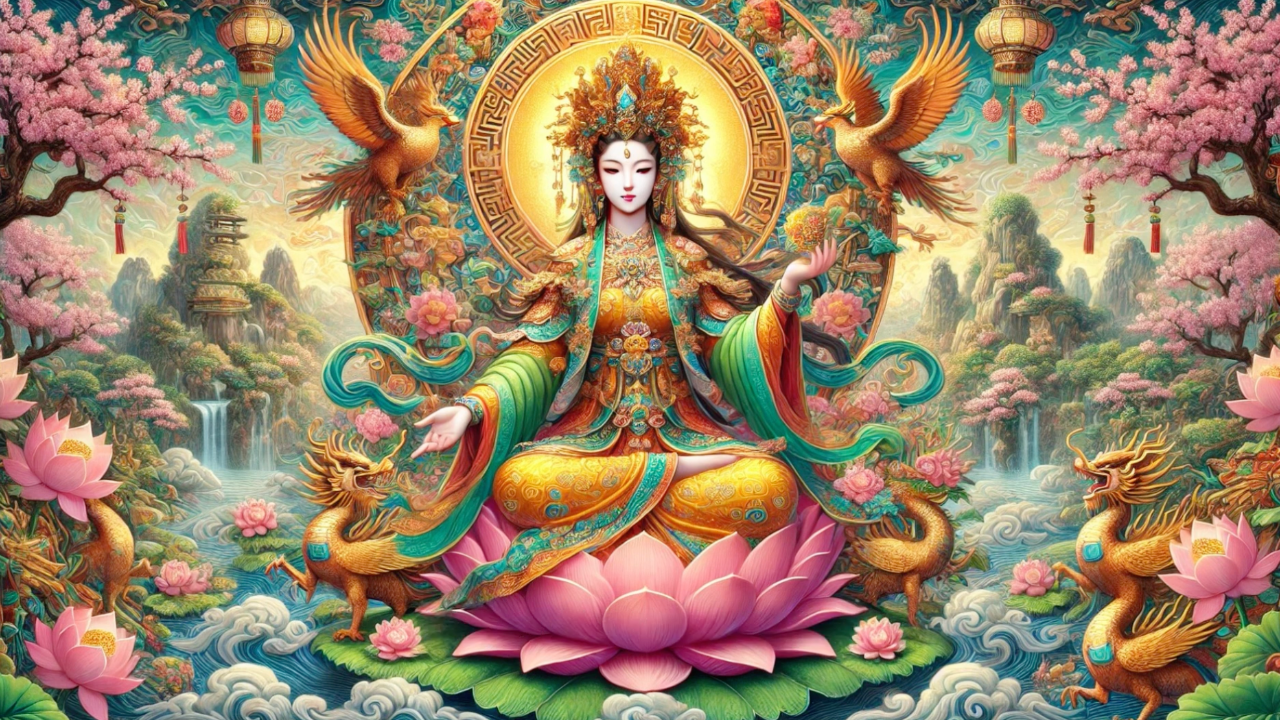
"She is the source of immortality, the weaver of destiny and the supreme keeper of Yin"
Throughout history/herstory and across all cultures women and goddesses have been forgotten about, undocumented, downplayed, subordinated. When women are erased from history, a possibility is removed - we are denied the mirrors, models, and myths that tell us this has been done before, by someone like you. This erasure is not a passive omission - it is an active tool of control, one that severs women from their own legacy of leadership, resistance and power.
Let me introduce you to Xiwangmu...
Who Is Xiwangmu?
Xiwangmu - also known as the Queen Mother of the West - is one of the oldest and most revered deities in all of Chinese mythology. She predates Taoism itself, and her story spans thousands of years of transformation. She is the supreme goddess in the Taoist pantheon, and during the Tang dynasty was the highest deity, a cosmic force.
Much of the information that circulates about Xiwangmu was written through a patriarchal lens. Culturally, women were defined and confined to the family. Many goddesses and women masters were subordinated and written out of history or slandered - they were subject to sexual slurs of vampirism.
Yet in the Taoist tradition, women were the teachers and masters of Nei Dan (Inner Alchemy), herbs, healing, sex & magic. More than any other religion, women played a very prominent role in its teaching & development. Tu Kuang-T’ing (850 - 933 CE), a scholar, was dedicated to preserving the records of female deities & masters and those records on Xiwangmu have survived, giving us great insight.
Xiwangmu's earliest depictions are striking and assert her as the great shamanic goddess of China. Ancient texts describe her with a leopard's tail and the teeth of a tiger - she was connected to death, darkness and the great mysteries of the underworld.
Over time - across many centuries and many hands - her image was tamed. Her association with death and the underworld transformed into something more encompassing: the creation & maintenance of the Universe, power in maintaining cosmic balance, transcendence and divine passion.
Her Realm: The Palace on Kunlun Mountain
Xiwangmu resides on Kunlun Mountain, which exists simultaneously as a real geographical location in western China and as a mythical cosmic axis - a pillar between heaven and earth. It's described as a celestial paradise: lush, vast and luminous, bordered by Lake Yaochi (the Jade Pool), rich with rare flora and fauna.
Her palace on Kunlun is a cosmic pillar where mortals, immortals and deities can meet and communicate with one another - a threshold place where transformation happens.
How She Appears
Xiwangmu wears long robes, with voluminous sleeves & is adorned with peacock feathers - a symbol of immortality & all-seeing vision. She rides a tiger, the animal most associated with her, and often has a dragon nearby, symbolising the balance of yin & yang.
Around her are her Jade Maidens - ecstatic, dancing women who were musicians, poets, skilled in Taoist arts of inner alchemy, sex and magic and who supported the Queen Mother with her rituals.
She also has many mythical creatures and deities as her messengers. She is associated with tigers, wild cats, moon rabbits, hares, foxes, deer, crows, magpies and dancing frogs - many of these being magical archetypes!
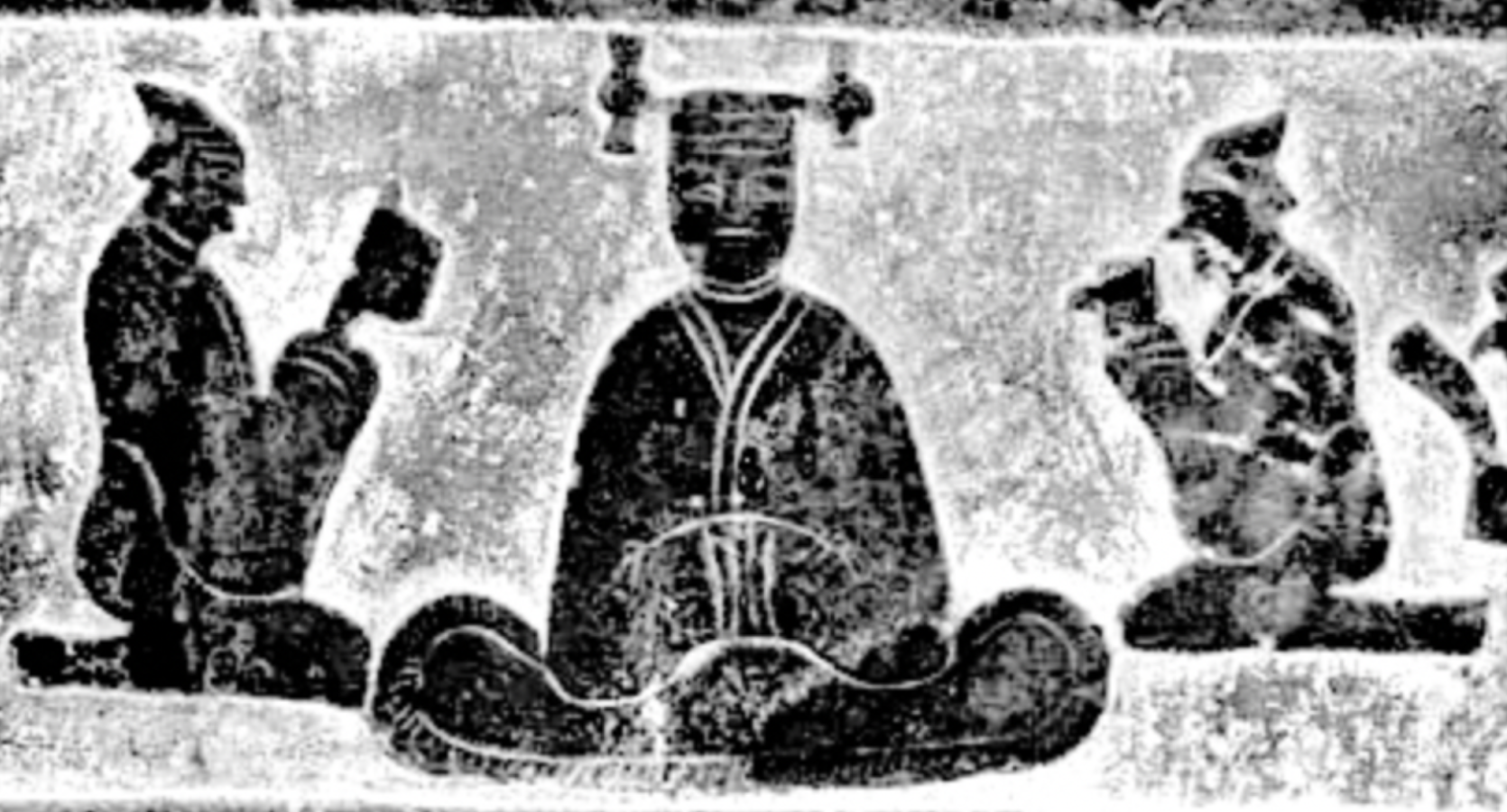 Xiwangmu tomb carving from the Han Dynasty with the loom or sheng head-dress
Her Role in the Taoist Tradition
The Keeper of Yin & The Guardian of the Elixir of Life
When Taoism absorbed Xiwangmu, she was recognised as the supreme embodiment of Yin - not the passive, diminished version of yin that modern culture sometimes projects onto the feminine, but yin in its full earthly potency.
She rules over the west - the direction of the setting sun, the underworld and the completion of cycles. She governs the realm of the dead but is also the font of vitality, energy and bliss.
She holds the Elixir of Life - the most coveted gift in Chinese mythology. Emperors were obsessed with meeting her.
As the guardian of the Elixir of Life, she is a potent symbol of the body's capacity for regeneration, longevity and spiritual awakening that sits at the heart of Taoist practice.
The Feast of Peaches
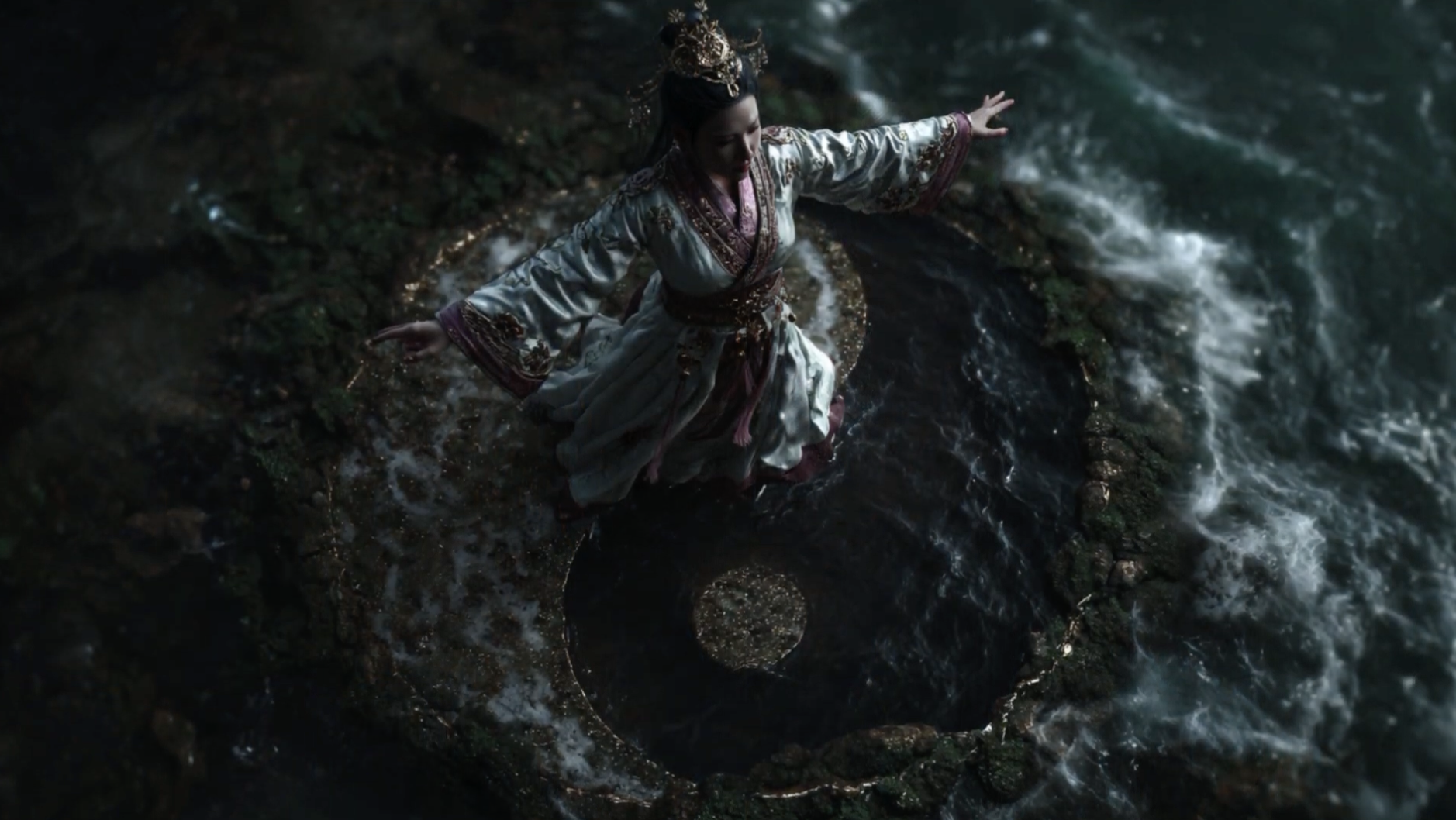
Perhaps her most famous mythological event is the Feast of Peaches - Pántáo Huì. Xiwangmu hosts elaborate banquets on Kunlun Mountain, where she serves peaches of immortality to gods, immortals and worthy mortals. These peaches only ripen once every 3,000 years. Those who eat them receive eternal life.
The peach itself is a potent symbol. In Chinese culture it represents longevity, fertility and the sweetness of a life well-lived.
What She Offers To Women in Particular
Xiwangmu has a particular tenderness for women - always willing to help another woman, regardless of her status, and was especially fond of teaching women over the age of 50. Her wisdom helped them step into the fullness of their power at a time when society would have them diminish. Celebrations of women’s 50th birthdays honour the great goddess!
Xiwangmu legitimised alternative paths beyond social norms - she embodies a model of women as creative, dynamic, independent forces. She inspires women to become adepts, healers, teachers etc. She offered special protection and guidance for women who stood outside the patriarchal system and the traditional social roles of family life in China - the dutiful daughter, the obedient wife, the self-sacrificing mother.
The Weaver of Destinies
One of her lesser-known attributes is the loom or the sheng - representing her cosmic ability to weave destinies. She rules over time and space, stars and the Big Dipper constellation. She is the only deity in the Chinese pantheon who speaks directly with mortals. This makes her a facilitator of divine communion - a bridge between the human and the sacred.
She grants wishes to those who sit with her on Kunlun Mountain.
Xiwangmu & Feminine Alchemy
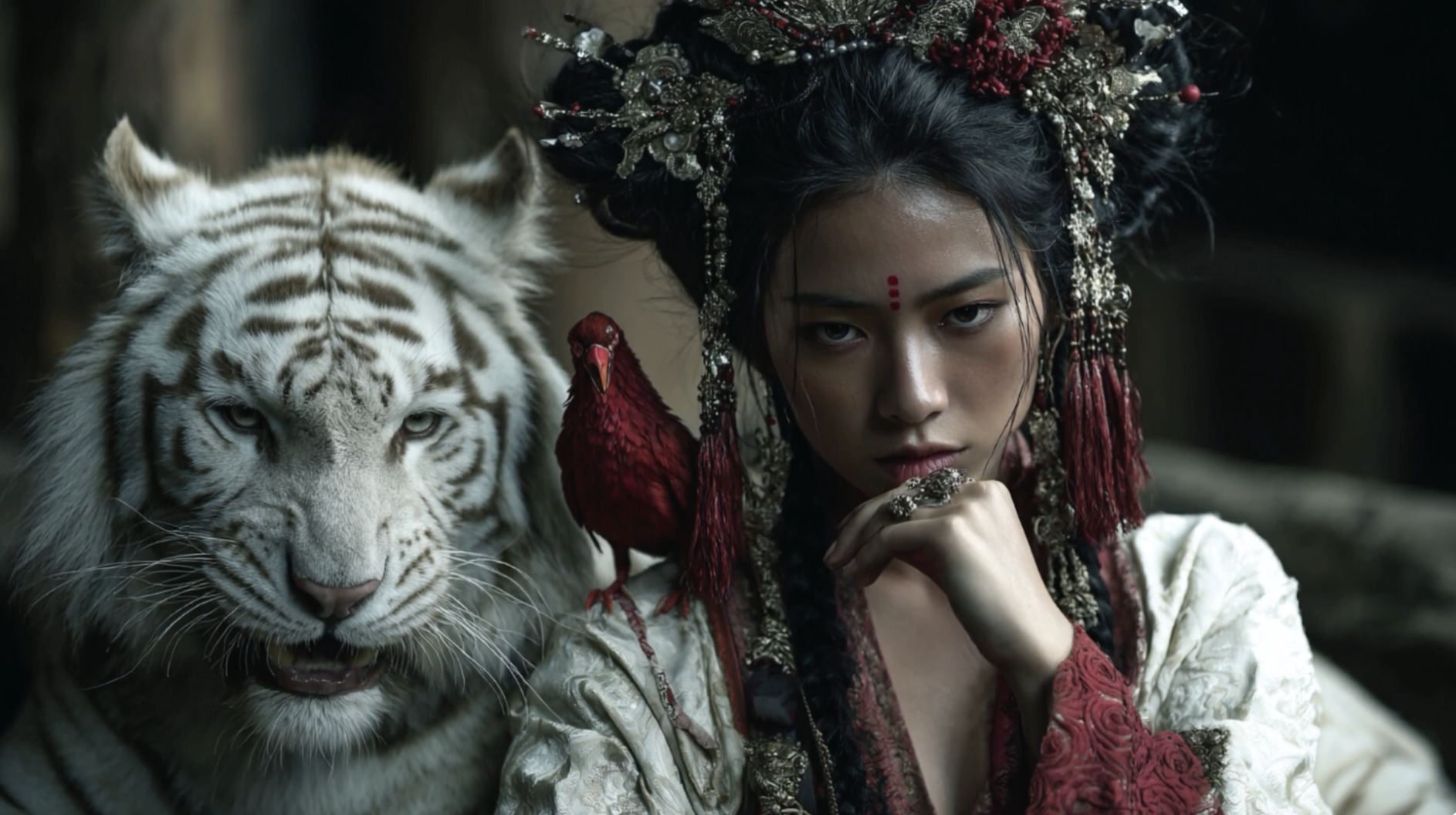
Xiwangmu is the celestial matriarch of Taoism and Inner Alchemy - the immortal teacher, the keeper of Yin and the supreme divine feminine. She holds within her story every theme that the Feminine Alchemy Teacher Training works with: the integration of wild and wise, the honouring of darkness as sacred, the cultivation of healing and longevity through yin practices, the power of feminine community and mentorship, and the understanding that true transformation requires both receiving wisdom and choosing to live by it.
Find out more about Feminine Alchemy Teacher Training here.